1. Why low-maintenance outdoor spaces matter in India?
Talk about how outdoor areas are exposed to conditions that indoor spaces aren't - sun, rain and dust. Add the reality that homeowners don't want to spend their Sundays constantly washing, scrubbing, repairing, repainting or replacing things. Also, with India rapidly developing in recent years, constructions have increased across cities, making dust and pollution a common part of everyday life. This adds another layer of maintenance for outdoor spaces, especially in urban areas.
1. Saves time for busy urban lifestyles: With busy work schedules and daily responsibilities, people have less time for regular outdoor maintenance. Low-maintenance spaces reduce the time spent on cleaning, repairs, and upkeep, so homeowners can simply enjoy the space.
2. Cuts water use in heat-prone regions: In hot regions (most of the India), outdoor spaces often need more water for cleaning, plants, and regular upkeep. Choosing low-maintenance materials and practical landscaping can help reduce unnecessary water use.
3. Reduces long-term cost and effort: Choosing durable, low-maintenance materials (like WPC decking, pavers and gravel) can reduce the need for regular repairs, repainting, and replacements. This saves both money and effort over time.
4. Increases usable living area and property value: A well-designed outdoor space can become an extension of the home, giving people more space to relax, entertain, and spend time with family. This is especially very important in India, where festivals and family gatherings are an important part of life. A functional outdoor area gives people an extra space to host guests and celebrate together.
5. Matches the reality of Indian housing types: From compact balconies and terraces in apartments to small plotted homes, many Indian households lack the space and resources for elaborate gardens and regular maintaining. Low-maintenance concepts like container planting, modular decking, and simple hardscape will be more practical.
2. Understand what is “Low - maintenance” from the start.
A low-maintenance outdoor space is one that is intentionally designed from day one to need minimal time, water, and effort while still looking good and being comfortable to use. Instead of assuming “low maintenance” means no care at all, it means choosing durable hardscapes like WPC decking, pavers, or gravel, limiting lawn area, using hardy native plants, and adding simple systems like drip irrigation and mulch so routine tasks shrink to a few minutes a week. In the Indian context, this also means planning for heat, dust, water logging and water scarcity so the space stays usable through summer and monsoon without constant repairs or watering.
1) Choose right flooring
Pick materials that can handle outdoor conditions and do not need frequent polishing, painting, or replacement.
RECOMMENDED -
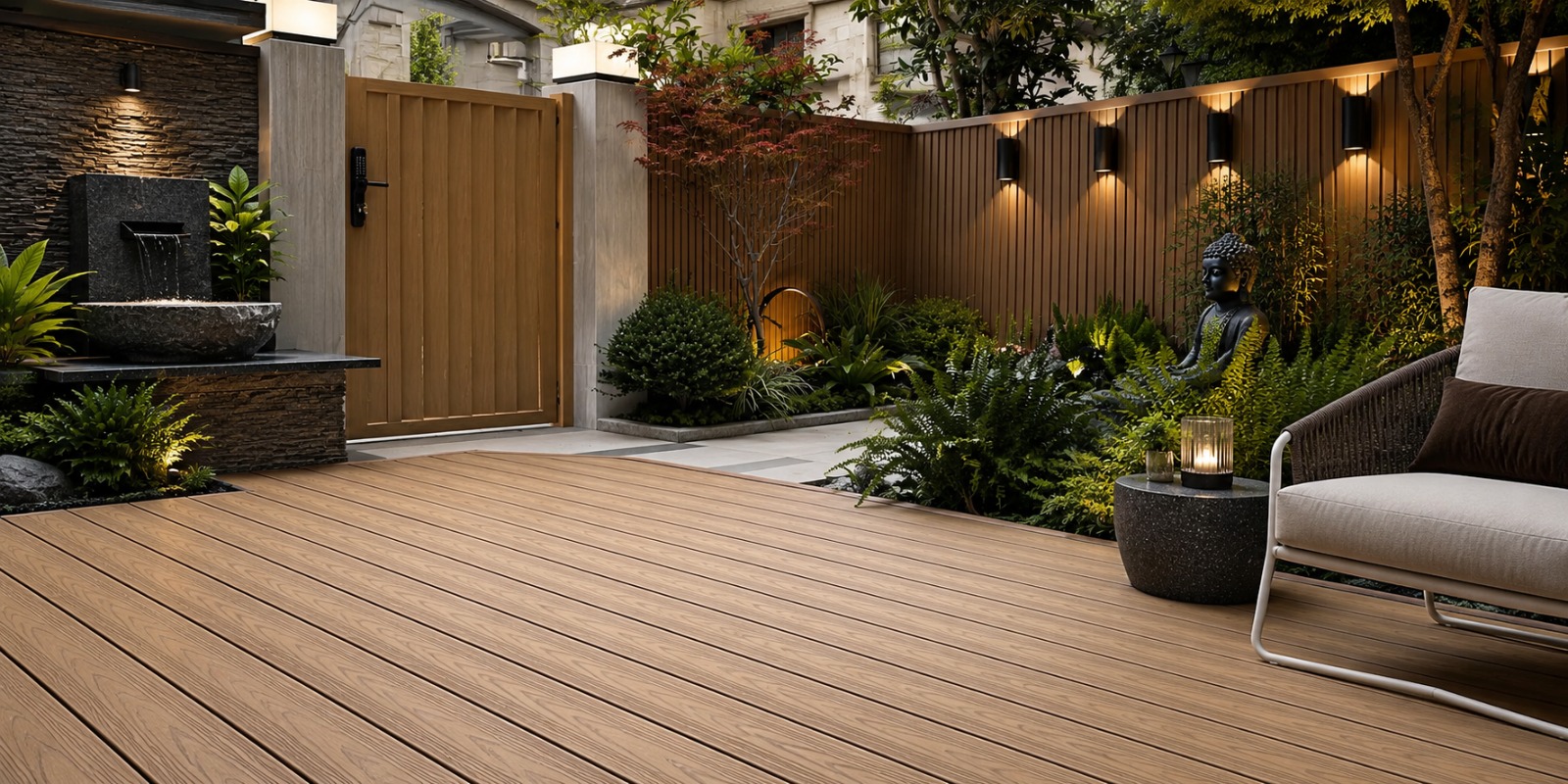
I. WPC Decking: Wood like look, durable, water-resistant, termite-resistant, and designed to handle outdoor conditions with low maintenance.
II. Outdoor-grade Porcelain Tiles: Easy to clean, water-resistant, and available in many designs suitable for outdoor spaces.
III. Natural Stone: Strong and long-lasting, especially when the right type of stone is chosen for the climate.
THINGS TO CONSIDER CAREFULLY -
I. Natural Wood: Looks beautiful but needs regular polishing, sealing, and protection from moisture and termites. If not polished and fixed, it will develop pointy splinters over time.
II. Basic Ceramic Tiles: Can crack or chip under heavy use or temperature change, and replacing individual tiles can affect the overall look and also add maintenance cost.
III. Artificial Grass: Collect dust, dirt and garbage. It needs regular cleaning, especially in the open plotted houses.
2) Create shade and protection
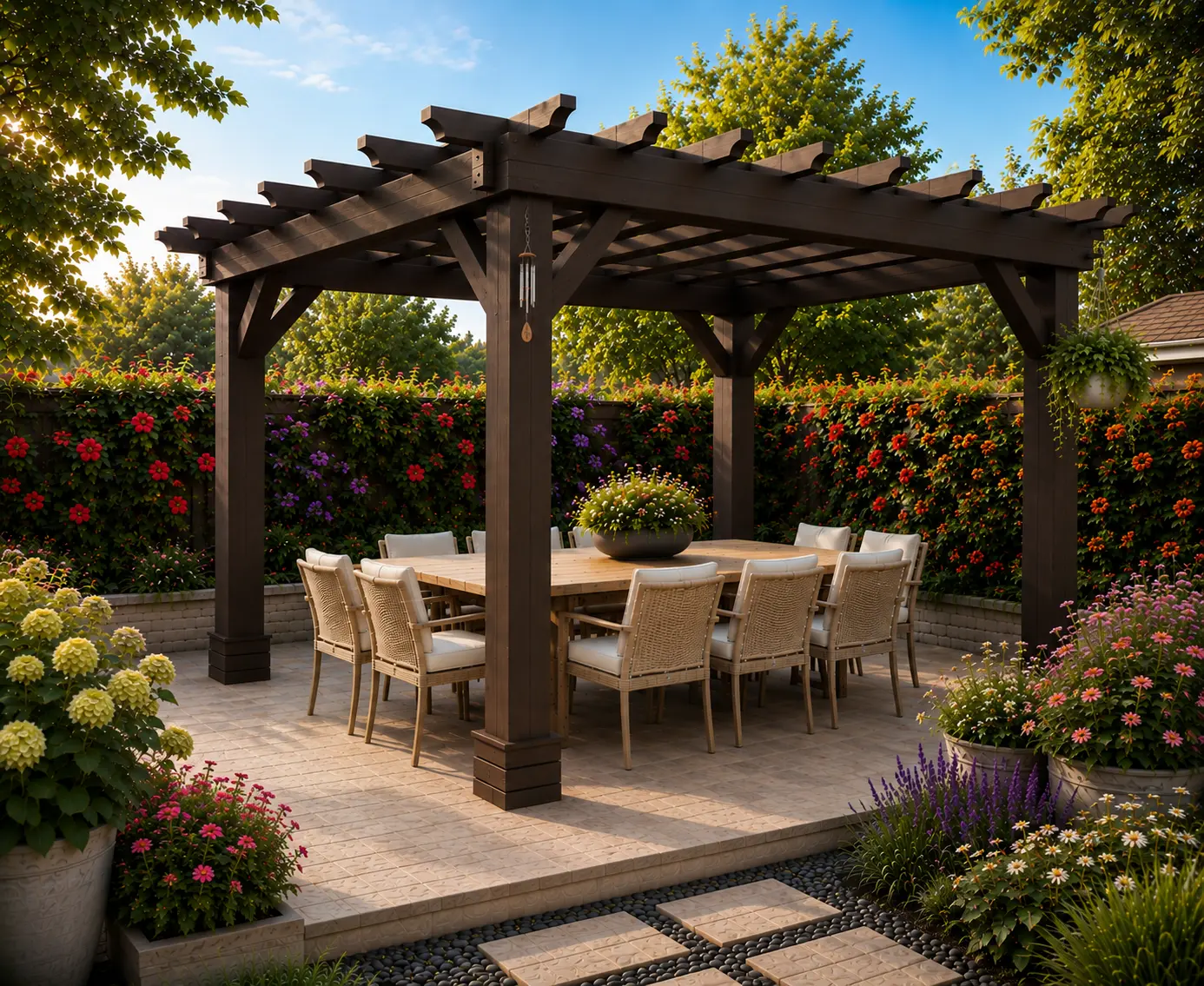
Pergolas, covered seating, and shaded areas will make the space more comfortable and protect furniture and surfaces from harsh sun and rain, and it also adds character to a basic patio or yard.
RECOMMENDED -
I. WPC Pergolas: Highly durable and water-resistant, making them suitable for outdoor conditions without regular keep up. It also matches the best with most of the Indian house aesthetics. (most preferred pergola type)
II. Aluminium Structures: Lightweight, strong, and resistant to rust, making them a practical option for outdoor shade structures.
THINGS TO CONSIDER CAREFULLY -
I. MS (Mild Steel): Easily develops rust because exposed to rain and moisture, especially if the protective coating gets damaged.
II. Fabric Canopies: Collects dust and dirt and needs regular cleaning and replacement over time.
III. Natural Wood: Needs regular polishing, sealing, and protection from moisture and termites.
3) Keep greenery simple and minimal
Instead of large lawns or plants that need constant care and attracts more insects, use plants that suit the local climate and are easier to maintain.
RECOMMENDED -
I. Native and climate suitable plants: Adapt better to local weather conditions and usually need less water and care.
II. Drought-tolerant plants: Require less frequent watering, making them useful in hot and dry regions especially for the houses where owners are constantly out and houses are unattended for days.
III. Potted and container plants: Easy to maintain, replace, and rearrange without changing the entire landscape.
THINGS TO CONSIDER CAREFULLY -
I. Large Lawns: Need regular watering, mowing, trimming, and care to stay healthy. It reduces the utility area which can be “not so comfortable” for big Indian families.
II. High-maintenance flowering plants: They need frequent watering, pruning, and seasonal replacement, not so cost efficient for many families.
III. Dense or complicated landscaping: Makes cleaning difficult and create more areas where dust, leaves, and debris collect. They are very prone to become a home of mosquitos and insects.
4) Think About Drainage
Many Indian cities suffer from poor urban planning, as evidenced by severe waterlogging during the monsoon season. That’s why a good drainage planning in houses is very important. It helps prevent water from collecting and causing damage to the outdoor space.
RECOMMENDED -
I. Properly sloped flooring: Helps rainwater flow away instead of collecting on the surface.
II. Drainage channels and floor drains: Provide a clear path for excess water to leave the space quickly.
THINGS TO CONSIDER CAREFULLY -
I. Flat surfaces without proper slope: Can cause water to collect and lead to stains, foul smell, algae, or surface damage.
II. Blocked or poorly planned drains: Can result in waterlogging and require frequent cleaning.
III. Non-porous surfaces covering large areas: Concrete, porcelain tiles, natural stones with sealed surfaces can increase surface runoff and put more pressure on drainage systems.
5) Choose Practical Furniture and Finishes
Outdoor furniture and finishes should be able to handle dust, sunlight, rain, and regular use without needing constant upkeep.
RECOMMENDED -
I. Powder-coated aluminium furniture: Lightweight, durable, and resistant to rust, making it suitable for outdoor use.
II. WPC outdoor furniture: For classic wooden aesthetics, resistant to moisture and termites and requires very less regular maintenance than most of the other categories.
THINGS TO CONSIDER CAREFULLY -
I. Untreated wooden furniture: Absorbs moisture, swells, and require regular polishing or sealing.
II. MS or untreated steel furniture: They rust when exposed to rain and moisture over time.
III. Indoor fabrics and finishes: They fade, stain, and deteriorate faster when exposed to direct sunlight and rain.
6) Think About Cleaning from the Beginning
Avoid designs with too many difficult-to-reach corners, complicated surfaces, or areas where dust and water can easily collect.
RECOMMENDED -
I. Open and simple layouts: Make cleaning easier by reducing unnecessary corners, gaps, and tight spaces.
II. Smooth, easy-to-clean surfaces: Allow dust and dirt to be removed quickly without special cleaning methods, like WPC flooring, Kota tiles, Sooth stone tiles.
III. Proper drainage and slight slopes: Help prevent water and dirt from collecting after rain or cleaning.
THINGS TO CONSIDER CAREFULLY –
I. Too many small gaps and corners: They trap dust, leaves, and dirt and make cleaning difficult and becomes a hiding spot for mosquitoes.
II. Uneven or highly textured surfaces: They collect dirt and may require more effort to clean.
Conclusion
Designing a low-maintenance outdoor space is about making smart choices from the beginning. The goal is not to create a space that needs no maintenance, but one that needs less time, water, cleaning, and repair while still looking good and being comfortable to use.
By choosing durable materials, simple greenery, proper drainage, practical furniture, and easy-to-clean surfaces, homeowners can create outdoor spaces that are easier to maintain and more enjoyable in the long run. A well-designed outdoor space should give you more time to enjoy it, not more work to take care of it.
At Woodshift, we offer a range of WPC solutions for outdoor spaces, including WPC decking, WPC flooring, WPC pergolas, WPC cladding, fencing, and outdoor applications. These solutions can be used for terraces, balconies, gardens, poolside areas, patios, and other residential outdoor spaces, helping homeowners create durable and low-maintenance spaces suited to everyday outdoor living. At Woodshift, we believe a well-designed outdoor space should be easy to enjoy and easy to maintain. Our WPC solutions are made for outdoor living, offering a practical balance of durability, functionality, and design.